Student/Faculty Feedback Facility in AICTE Web Portal | International Conference - MBA (ICRIPI-2026) | IEEE International Conference on Computational Intelligence for Sustainable Solutions (ICCISS-2027) | International Conference on Integrated Carbon and Sustainability (ICICS-26)

Course Description

The B.Tech in Advanced Mechatronics and Industrial Automation is a four-year interdisciplinary program that integrates mechanical, electronics, computer science, control engineering, and AI/ML. Designed in alignment with Industry 4.0 and beyond, the program equips students with cutting-edge knowledge in robotics, smart manufacturing, and cyber-physical systems.

Graduates are prepared for roles in manufacturing, robotics, automotive, aerospace, healthcare automation, and renewable energy industries, with strong career opportunities in both India and global markets.

Why choose B.Tech (AM&IA) at KIET?
  • Future-Proof Career in Industry 4.0 & Beyond – Prepares you for the next wave of industrial transformation; robotics, AI-integrated automation, smart manufacturing, and IoT-based systems.
  • Interdisciplinary Advantage – Master skills across mechanical, electronics, control systems, AI/ML, and computer programming, making you versatile and industry-ready.
  • Cutting-Edge Labs & Technology – Access to advanced robotics labs, PLC/SCADA training setups, embedded systems labs, machine vision systems, and simulation software like MATLAB, SolidWorks, and Siemens TIA Portal.
  • Strong Industry Connect – Tie-ups with automation leaders like FESTO, ADDVERB etc for industrial training, internships, and placements.
  • Practical, Project-Based Learning – Learn by doing — from your first year you’ll work on live industrial projects, participate in hackathons, and solve real-world problems.
  • Global Certifications – Opportunity to earn globally recognized certifications (Siemens SCE, Mitsubishi PLC, FANUC Robotics, NI LabVIEW) alongside your degree.
  • Research & Innovation Culture - Collaborate with faculty on R&D projects, publish papers, and present at national/international conferences.
  • Excellent Placement Record of KIET - Leverage KIET’s strong alumni network and proven track record in placing students in top companies with attractive packages.
  • Holistic Development - Soft skills, leadership, and ethics training integrated into the program to make you not just a skilled engineer, but a complete professional.
  • Strategic Location & Institutional Reputation - Located in Delhi-NCR — a hub for manufacturing and automation industries — offering easy access to internships and industrial visits. KIET’s NBA-accredited programs and strong brand ensure credibility and recognition.

Vision

To strive to be a globally recognized programme in Advanced Mechatronics and Industrial Automation through skill-based education, research, and innovation, developing future-ready professionals for intelligent and sustainable manufacturing.
Mission

  • To impart quality education in intelligent automation through modern teaching and hands-on learning.
  • To foster a culture of interdisciplinary research, innovation, and entrepreneurship.
  • To develop globally competent and industry-ready professionals through skill development and industry engagement.
  • To nurture ethical, socially responsible, and lifelong learners committed to sustainable industrial advancement.

Program Outcomes

  • PO1: Engineering Knowledge: Apply knowledge of mathematics, natural science, computing, engineering fundamentals and an engineering specialization as specified in WK1 to WK4 respectively to develop to the solution of complex engineering problems.
  • PO2: Problem Analysis: Identify, formulate, review research literature and analyze complex engineering problems reaching substantiated conclusions with consideration for sustainable development. (WK1 to WK4)
  • PO3: Design/Development of Solutions: Design creative solutions for complex engineering problems and design/develop systems/components/processes to meet identified needs with consideration for the public health and safety, whole-life cost, net zero carbon, culture, society and environment as required. (WK5)
  • PO4: Conduct Investigations of Complex Problems: Conduct investigations of complex engineering problems using research-based knowledge including design of experiments, modelling, analysis & interpretation of data to provide valid conclusions. (WK8)
  • PO5: Engineering Tool Usage: Create,select and apply appropriate techniques, resources and modern engineering & IT tools, including prediction and modelling recognizing their limitations to solve complex engineering problems. (WK2 and WK6)
  • PO6: The Engineer and The World: Analyze and evaluate societal and environmental aspects while solving complex engineering problems for its impact on sustainability with reference to economy, health, safety, legal framework, culture and environment. (WK1, WK5, and WK7)
  • PO7: Ethics: Apply ethical principles and commit to professional ethics, human values, diversity and inclusion; adhere to national & international laws. (WK9)
  • PO8: Individual and Collaborative Team work: Function effectively as an individual, and as a member or leader in diverse/multi-disciplinary teams.
  • PO9: Communication: Communicate effectively and inclusively within the engineering community and society at large, such as being able to comprehend and write effective reports and design documentation, make effective presentations considering cultural, language, and learning differences.
  • PO10: Project Management and Finance: Apply knowledge and understanding of engineering management principles and economic decision-making and apply these to one’s own work, as a member and leader in a team, and to manage projects and in multidisciplinary environments.
  • PO11:Life-LongLearning: Recognize the need for, and have the preparation and ability fori) independent and life-long learning ii) adaptability to new and emerging technologies and iii) critical thinking in the broadest context of technological change.

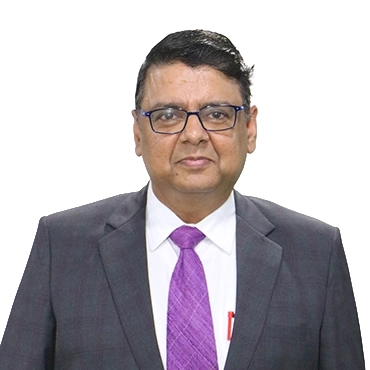
Dean's Message

Dr. Ashish Karnwal

Dr. Ashish Karnwal

Welcome to the Department of Advanced Mechatronics & Industrial Automation at KIET.

The department aims to equip students with strong technical knowledge, problem-solving abilities, employability skills, and an innovative mindset to address societal and industrial challenges.

The department boasts state-of-the-art laboratories and research facilities. Continuous industry engagement through collaborative projects, industrial visits, expert talks, and discussions on emerging technologies helps create an environment that mirrors real-world engineering applications. To nurture hands-on learning and interdisciplinary interactions, the department conducts regular technical activities and supports student-led hobby clubs such as the SAE-KIET Collegiate Club.

We have also established strategic collaborations with Mercedes-Benz India Ltd., BIESSEE INDIA, Automotive Skill Development Council (ASDC), and 3D Curiosity to enhance skill development initiatives. Our faculty members are academically accomplished, actively involved in research, serve on editorial boards of reputed journals, review scholarly articles, and contribute to national and international conferences, workshops, and seminars.

This website provides a comprehensive overview of our academic programs, research contributions, laboratories, faculty profiles, alumni engagement, and student activities. We invite you to explore and learn more about the vibrant academic environment of the Department of Advanced Mechatronics & Industrial Automation at KIET.
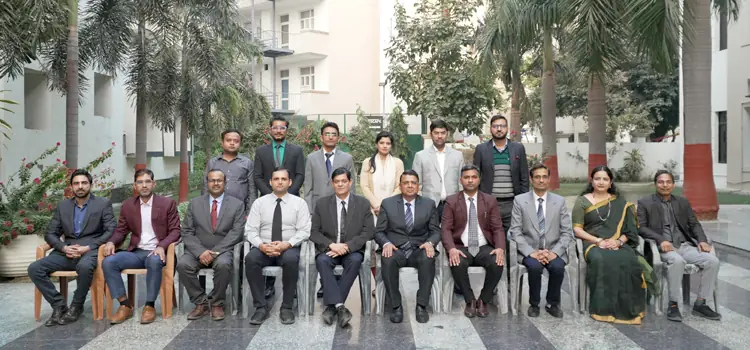
Faculty

Faculty Image

Class Room

The Advanced Mechatronics & Industrial Automation Department features modern, well-equipped classrooms designed to create an engaging and conducive learning environment. Each classroom includes a high-definition Smart TV panel that supports interactive teaching, enabling dynamic visual content and real-time demonstrations, along with a dedicated audio system and internet connectivity. Advanced air-conditioning ensures a comfortable atmosphere, helping students remain focused throughout lectures. Every student workstation is fitted with individual power outlets to support laptops and other electronic devices for simulations, hands-on activities, and project work. Collectively, these facilities provide a contemporary, technology-enhanced space that fosters innovation and elevates the overall academic experience.
Labs

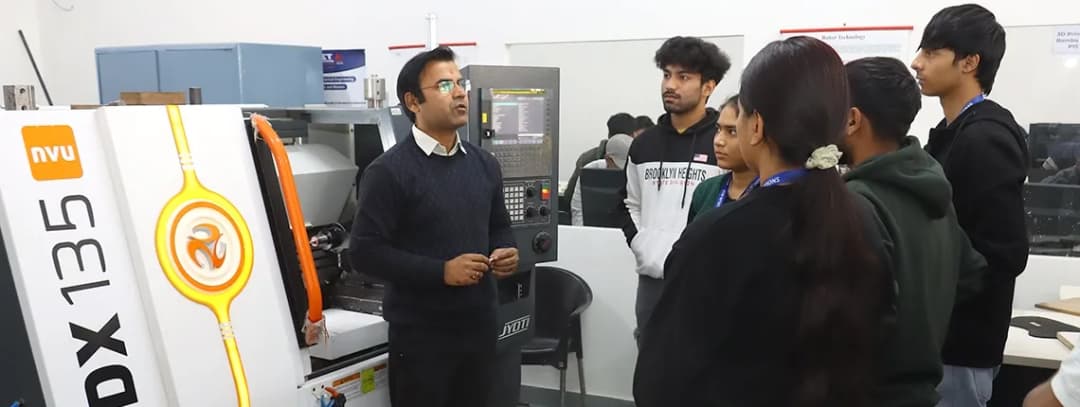
The department houses 3 modern computing labs that support practical training in programming, software development, and research.
Placement

Centre of Excellence

Testimonials

Clubs

Syllabus

Important Links

Register For Admission 2026–27