Course Description

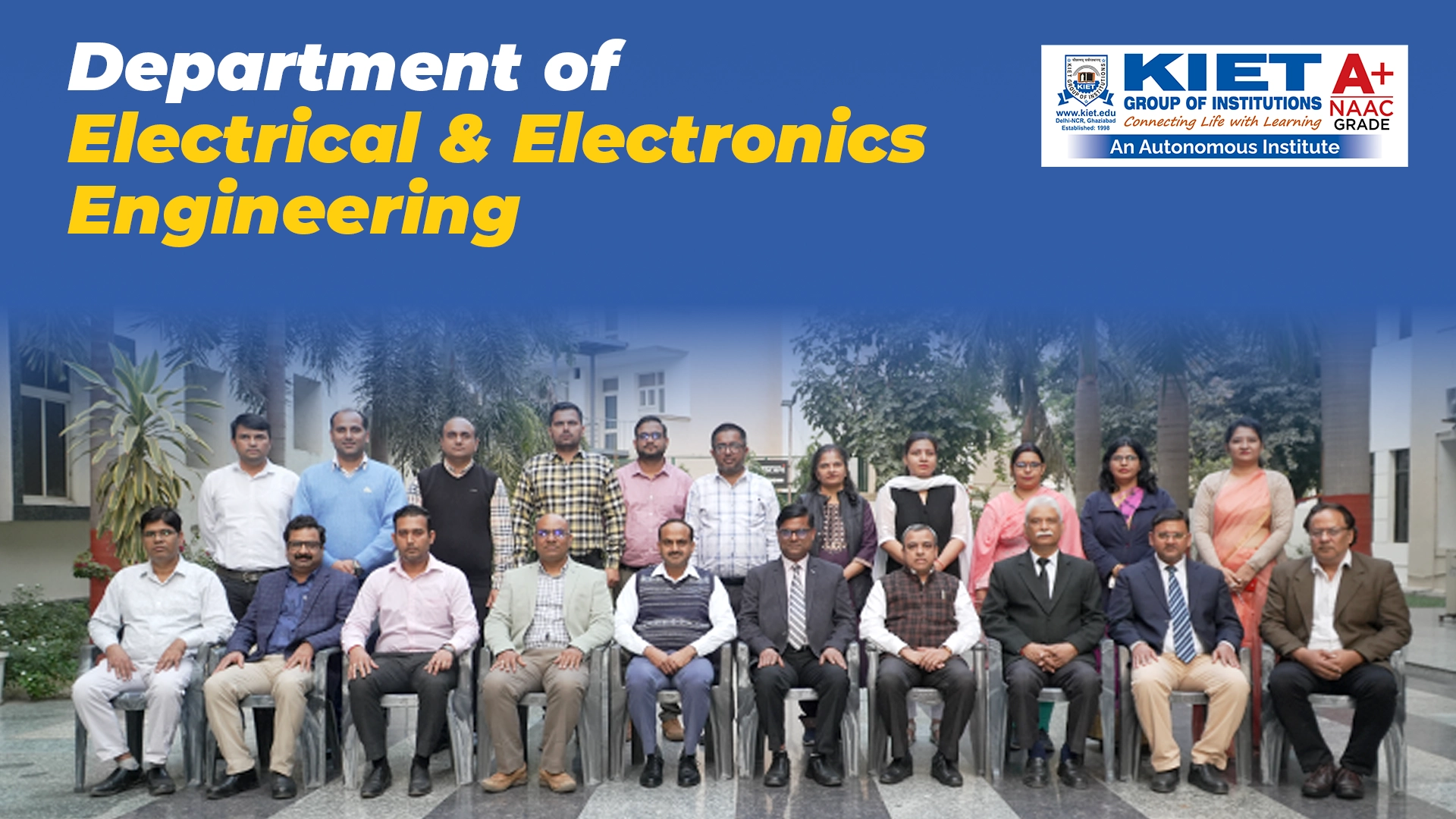
Established in 1998, the Department of Electrical and Electronics Engineering (EEE) at KIET has been a pillar of academic excellence and innovation for over 22 years. With a team of highly qualified and experienced faculty, the department is dedicated to producing industry-ready graduates who are not only technically sound but also globally competent and ethically grounded.

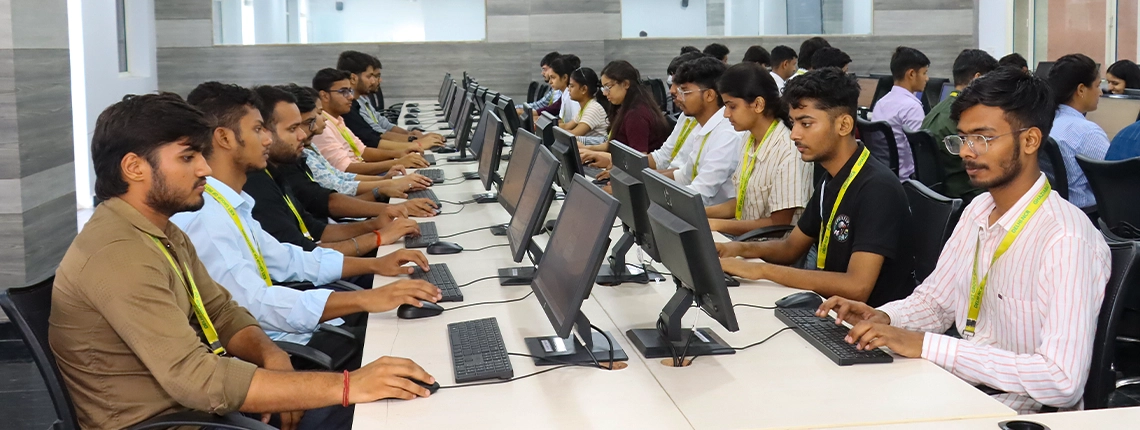
In today's fast-evolving digital world, engineering education must go beyond classroom theories and textbook concepts. Our curriculum emphasizes real-world application, encouraging students to solve practical problems through a blend of software programming skills and hands-on experience with real-time systems and components.

The department fosters a learning environment that bridges the gap between academic knowledge and industrial demands. We aim to develop students who are capable of addressing contemporary global challenges with innovative and sustainable solutions.

To enrich academic exposure and promote a strong research culture, the department has successfully organized a series of international conferences under the CIPECH banner. Launched in 2014, CIPECH has become a prominent platform for researchers, academicians, and industry professionals to exchange knowledge and insights.

Our consistent efforts in research and development have earned us the status of a recognized research centre by Dr. APJ Abdul Kalam Technical University, further strengthening our commitment to academic excellence and innovation.

  • Power and Energy Systems
  • Automation and Control
  • Electronics and Embedded Systems
  • Renewable Energy
  • IT and Software Services

Vision

To become a leader in fostering innovation and research for sustainable solutions in electrical and electronics engineering to address global challenges and serve humanity.

Mission

  • To deliver quality professional education in Electrical and Electronics Engineering, fostering skills and values with outcome-based teaching methodologies.
  • To cultivate the culture of research, innovation, entrepreneurship, and problem solving for driving impactful changes.
  • To provide a conducive and dynamic work environment, enabling continuous growth, satisfaction, and enthusiasm among faculty members.

Program Outcomes

  • Engineering knowledge: Apply the knowledge of mathematics, science, engineering fundamentals, and an engineering specialization to the solution of complex engineering problems.
  • Problem analysis: Identify, formulate, review research literature, and analyze complex engineering problems reaching substantiated conclusions using first principles of mathematics, natural sciences, and engineering sciences.
  • Design/development of solutions: Design solutions for complex engineering problems and design system components or processes that meet the specified needs with appropriate consideration for the public health and safety, and the cultural, societal, and environmental considerations.
  • Conduct investigations of complex problems: Use research-based knowledge and research methods including design of experiments, analysis and interpretation of data, and synthesis of the information to provide valid conclusions.
  • Modern tool usage: Create, select, and apply appropriate techniques, resources, and modern engineering and IT tools including prediction and modeling to complex engineering activities with an understanding of the limitations.
  • The engineer and society: Apply reasoning informed by the contextual knowledge to assess societal, health, safety, legal and cultural issues and the consequent responsibilities relevant to the professional engineering practice.
  • Environment and sustainability: Understand the impact of the professional engineering solutions in societal and environmental contexts, and demonstrate the knowledge of, and need for sustainable development.
  • Ethics: Apply ethical principles and commit to professional ethics and responsibilities and norms of the engineering practice.
  • Individual and team work: Function effectively as an individual, and as a member or leader in diverse teams, and in multidisciplinary settings.
  • Communication: Communicate effectively on complex engineering activities with the engineering community and with society at large, such as being able to comprehend and write effective reports and design documentation, make effective presentations, and give and receive clear instructions.
  • Project management and finance: Demonstrate knowledge and understanding of engineering and management principles and apply these to one's own work, as a member or leader in a team, to manage projects in multidisciplinary environments.
  • Life-long learning: Recognize the need for, and have the preparation and ability to engage in independent and life-long learning in the broadest context of technological change.

Dean's Message

Welcome to the Department of Electrical and Electronics Engineering (EEE) at KIET, Ghaziabad.

It gives me immense pleasure to address you through this platform and extend a warm welcome to all students, parents, and stakeholders. Since its inception in 1998, the department has consistently upheld its commitment to academic excellence, technical innovation, and holistic development—ensuring that every student is prepared for a successful future in a rapidly evolving global landscape.

At KIET–EEE, our mission is to nurture technically proficient, ethically grounded, and industry-ready professionals who can contribute to India’s vision of becoming a developed nation by 2047. Our strong academic framework, combined with value-based education, ensures that students not only excel in their careers but also uphold integrity, humanity, and responsibility in all aspects of life.

We offer a robust B.Tech. programme designed to meet the demands of modern industry. The curriculum is strengthened by a highly qualified faculty team, advanced laboratories, and continuous industry engagement. Our well-equipped Machines, Power Electronics & Drives, Basic Electrical Engineering, and modern AI and ML–driven Software Computational Laboratories provide students with strong practical exposure and a future-ready technological skill set. Students also actively participate in industry-sponsored innovative live projects, enabling them to work on real-world challenges, build professional confidence, and develop impactful engineering solutions.

The department proudly hosts two industry-driven Centres of Excellence, fostering research, innovation, and hands-on learning:

Centre of Excellence for Power & Energy Systems (in collaboration with Tata Power DDL) – advancing knowledge in smart grids, renewable energy integration, and sustainable power solutions.

Centre of Excellence for Electric Mobility (in collaboration with L&T) – driving innovation in electric vehicles, energy storage, and future mobility technologies.

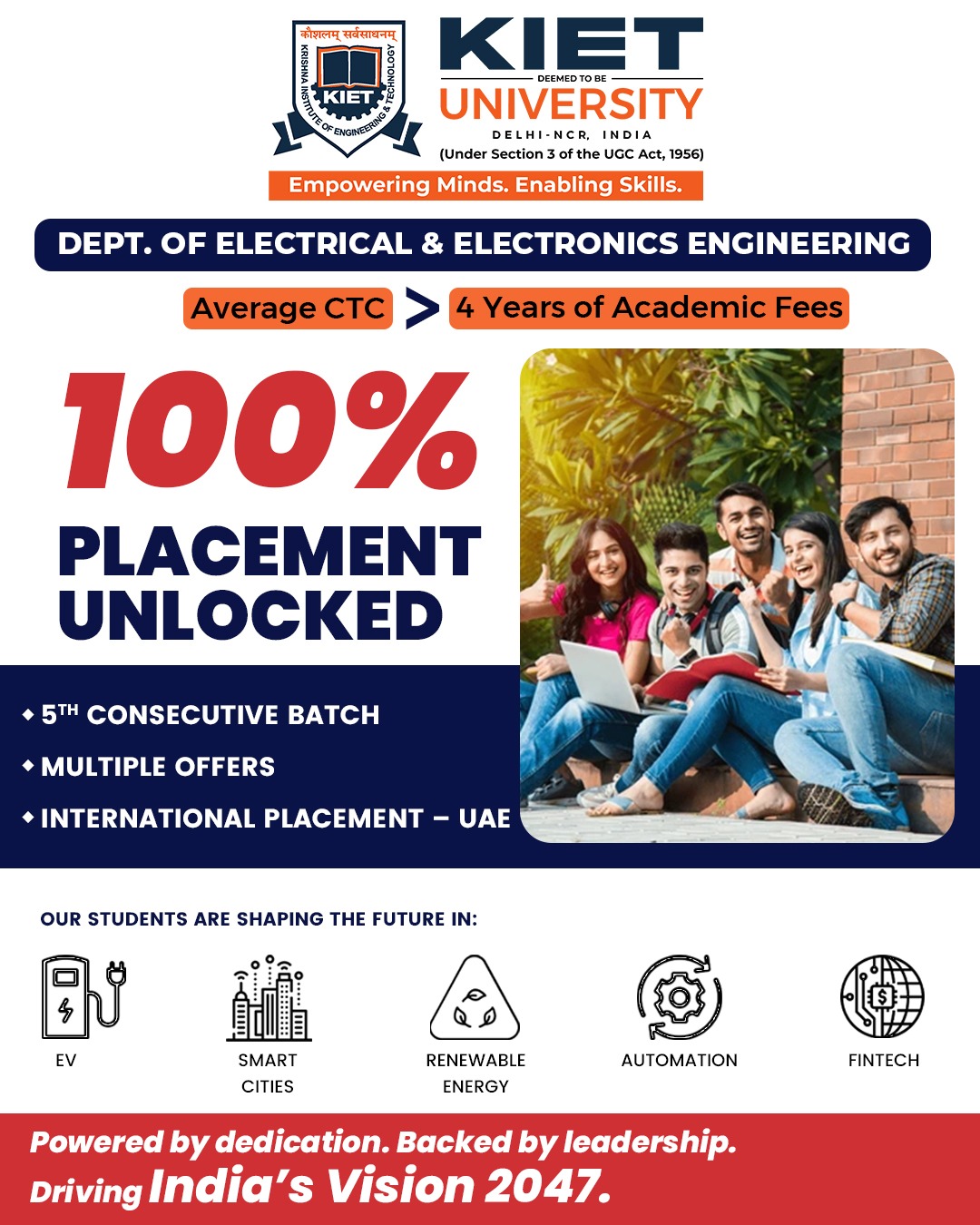
Our consistent record of excellent placements, strong alumni network, and deep-rooted industry partnerships ensure that parents can confidently entrust their children’s future to us. We remain committed to building students’ competencies, character, and confidence so they emerge as leaders and innovators who create meaningful impact in society.

On behalf of the department, I welcome you to join our mission of shaping young minds through skill-oriented and value-based education.

- Dr. Neeraj Kumar Gupta

Faculty

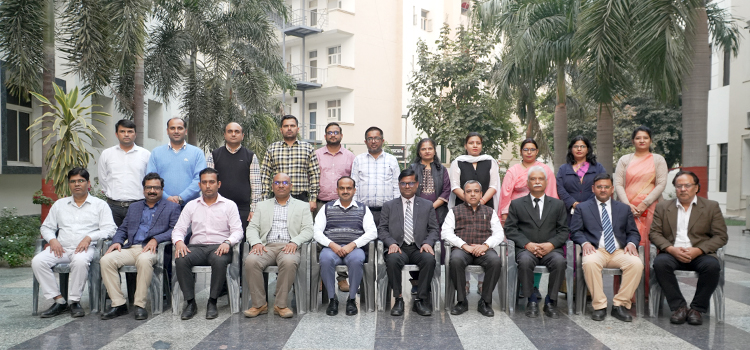
Faculty Image
S.NoRankCount
1PROFESSOR5
2ASSOCIATE PROFESSOR6
3ASSISTANT PROFESSOR13
4PROFESSOR OF PRACTICE1
5ADJUNCT FACULTY2
S.NoNameDesignation
1Dr. Neeraj Kumar GuptaProfessor & Dean EEE
2Dr. Yaduvir SinghProfessor & Program Head
3Dr. Arvind Kumar SharmaProfessor & Head-HCC
4Dr. Satish KumarProfessor
5Dr. Nitin Kumar SaxenaProfessor
6Dr. Jyoti SrivastavaAssociate Professor
7Dr. Rahat U KhanAssociate Professor
8Dr. Masood RizviAssociate Professor
9Dr. Ruchika SinghAssociate Professor
10Dr. Surendra Kumar TripathiAssociate Professor
11Dr. Md. Shariz AnsariAssociate Professor
12Dr. Ameer FaisalAssistant Professor
13Dr. SalimAssistant Professor
14Dr. SheetalAssistant Professor
15Dr. Rajeev KumarAssistant Professor
16Prof. Varun SharmaAssistant Professor
17Dr. Sourav DiwaniaAssistant Professor
18Prof. Kapil GandhiAssistant Professor
19Dr. Snigdha ChaturvediAssistant Professor
20Dr. BandanaAssistant Professor
21Dr. Vanya GoelAssistant Professor
22Dr. Ankur MaheshwariAssistant Professor & Program Head (I Year)
23Dr. Mukesh SinghAssistant Professor
24Dr. Bhuvan SharmaAssistant Professor
25Dr. Sindhu BhaskarProfessor Of Practice
26Mr. Ashish D. ThombreAdjunct Faculty
27Mr. Arun Kumar YadavAdjunct Faculty
28Mr. Praveen Kumar TyagiSr. Lab In-charge
29Mr. Krishna Pratap SinghLab Instructor (II)
30Mr. Prakash Chandra ThakurLab Instructor (II)
31Mr. PrempalLab Instructor (II)
32Mr. Pratipal SinghLab Instructor (II)
33Mr. Girish DuttLab Instructor (II)
34Mr. Anil Kumar KushwahaLab Instructor (I)
35Mr. Umesh Kumar MishraLab Technician (II)
36Mr. Amit KumarLab Technician (II)
37Mr. Lalit KumarOfficer
38Mr. Sanju Singh (ELCE)Sr. Executive (Academic Support)

Publications & Research

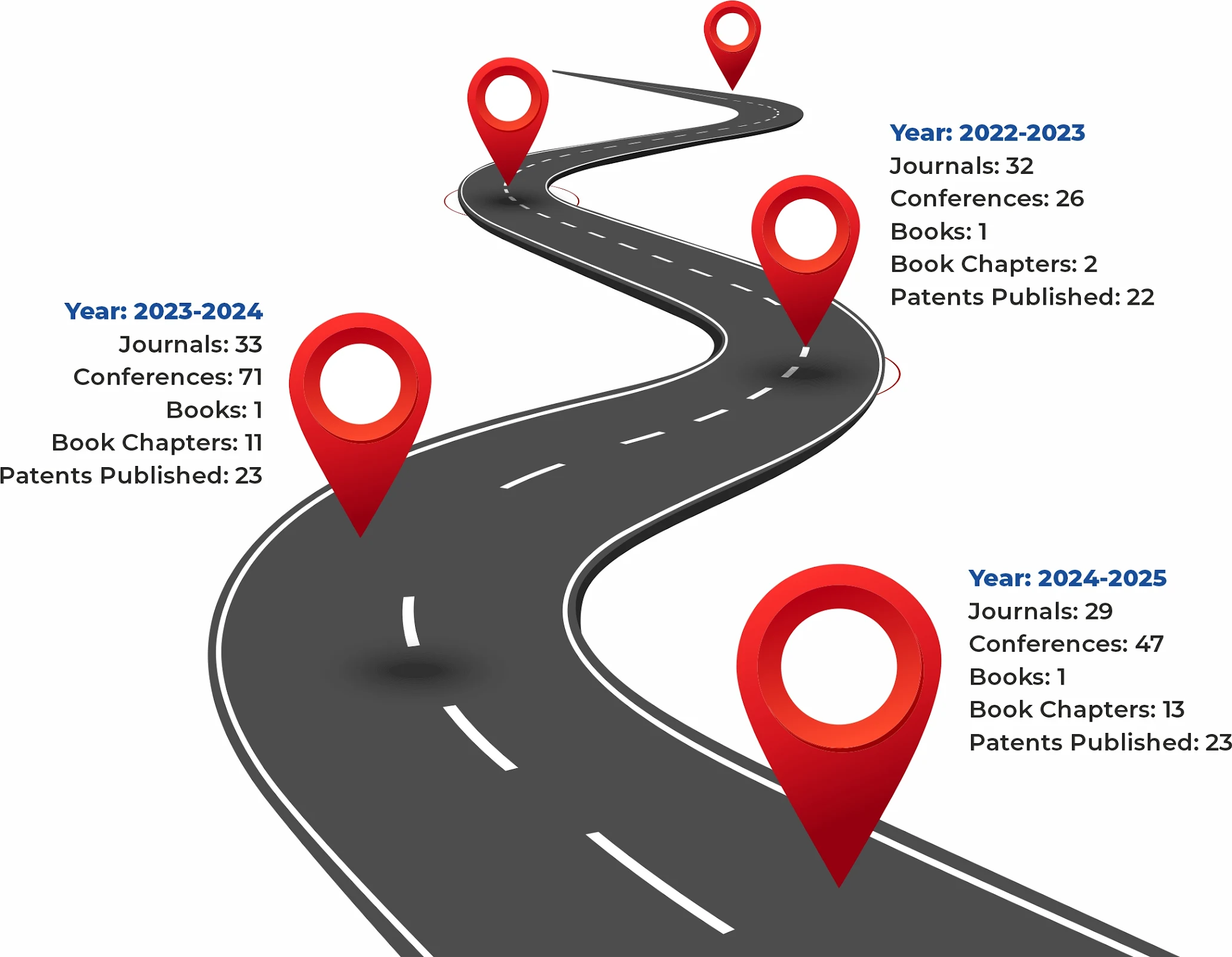
publications and research
1
2
3
Overall Research Summary
S.NoPublication CategoryCount
1Journal18
2Conference19
3Book1
4Book Chapter1
5Patent Published4
6Patent Granted9
7Ph.D Guidance5

Class Room

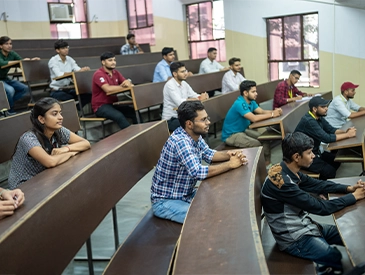
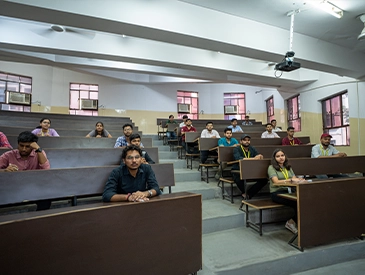
We have well-equipped class rooms with smart touch boards, audio system and internet facilities.

ClassRoom
ClassRoom

Labs

Students engage with advanced laboratories, including Power Systems, Power Electronics, Embedded Systems, Instrumentation and Measurement, and Computer-Aided Design. Platforms like MATLAB, LabVIEW, CATIA, and OPAL-RT simulate real-world scenarios, bridging theory and practice seamlessly.

  • Microprocessors Lab : Provides hands-on training in microprocessor and microcontroller programming, interfacing, and embedded system applications.
  • Power Electronics Lab : Equipped with converters, inverters, and experimental setups to study switching devices and power electronic circuits used in modern electrical systems.
  • Electrical Machine Lab : Facilitates practical experiments on DC machines, induction motors, transformers, and synchronous machines to understand their characteristics and performance.
  • Power Systems Laboratory : Offers simulation and analysis tools for power generation, transmission, distribution, load flow studies, and system stability assessments.
  • Electric Drives & Control System Laboratory : Provides exposure to motor drive systems, controllers, and feedback mechanisms used in industrial automation and motion control applications.
  • Industrial Automation & PLC Lab : Trains students in programmable logic controllers, SCADA systems, and industrial automation techniques widely used in manufacturing industries.
  • IoT and Embedded Systems Laboratory : Focuses on sensor integration, IoT platforms, and embedded system development for smart automation, monitoring, and real-time applications.
  • Measurement Embedded system Lab : Equipped for precision measurement, instrumentation experiments, and embedded system prototyping using modern tools and microcontrollers.
  • Simulation platforms: MATLAB, LabVIEW, CATIA, OPAL-RT, MULTISIM, PSAT
Lab image

Placement

S.NoBatchHighest PackageAverage PackagePercentage of Placement
12024-20258.40 LPA3.89 LPA100%
22023-202410 LPA3.81 LPA100%

Center of Excellence

Power and Energy Systems

Power and Energy Systems

E-Mobility

E-Mobility

Testimonials

Becoming an officer in the Indian Army was a dream that required perseverance, dedication, and resilience. I started my journey with a clear goal but faced challenges along the way. The SSB interview process, known for its ri...Read More

Testimonial
Kartikey Bhardwaj, 2020-24
Officer at Indian Army

I recall my wonderful past four years (2005-2009) at KIET towards my undergraduate studies at the Electrical and Electronics Engineering Department. I really learnt a lot in these four years @ KIET from my teachers and friend...Read More

Testimonial
Anoop Jain, 2005-2009
Assistant Professor, IIT Jodhpur

This is Shikha Saini, ALUMNI 2012 (B.Tech, EN ,2008-2012).I wish to describe my journey of four years in EN,KIET.I joined KIET, one of the top 5 college in year 2008 of UPTU with great expectation and what I got after complet...Read More

Testimonial
Shikha Saini, 2008-2012
Additional General Manager, National High Speed Rail Corporation Ltd (NHSRCL)

Clubs

Industrial Electronics and Control Club

Industrial Electronics and Control Club

This Club provides a dynamic platform for students to apply their innovative ideas and transform them into impactful real-world solutions. The club encourages creativity, hands-on learning, and practical implementation through projects, workshops, and industry-aligned activities.

Socio Tech Innovation Club

Socio Tech Innovation Club

The agenda of this club is to incorporate technical innovations in the minds of the students and provide them the confidence that any idea can be accepted and worked upon. Tech Innovation Club helps to engage students in innovative and creative activities apart from providing opportunities for hands-on activities.

Syllabus

EEE I YEAR
EEE II YEAR
EEE II YEAR Autonomous
EEE III YEAR
EEE IV YEAR
SIH Software Edition 2025SIH Grand Finale will be held on 8 - 9 December
UP Scholarship 2025Biometrics verification will continue until December 10th
AKTU Circular Odd Sem 2025-26Regarding Filling Examination Form (III & IV Year)
Alumni Meet 2025Alumni Meet is scheduled for 27th December, 2025

Important Links

Register For Admission 2026–27