- Est. Yr:2025
- Duration:4 Years
- Intake:30 students
- Tuition Fee:₹ 1,70,000 PA

The B.Tech in Advanced Mechatronics and Industrial Automation is a four-year interdisciplinary program that integrates mechanical, electronics, computer science, control engineering, and AI/ML. Designed in alignment with Industry 4.0 and beyond, the program equips students with cutting-edge knowledge in robotics, smart manufacturing, and cyber-physical systems.
Graduates are prepared for roles in manufacturing, robotics, automotive, aerospace, healthcare automation, and renewable energy industries, with strong career opportunities in both India and global markets.
To be recognized as a preferred destination for education and research in mechatronics and industrial automation, producing globally competent innovators and entrepreneurs
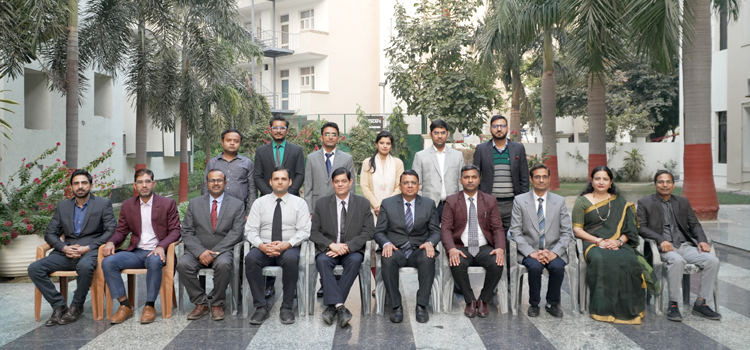
Welcome to the Department of Advanced Mechatronics & Industrial Automation at KIET.
The department aims to equip students with strong technical knowledge, problem-solving abilities, employability skills, and an innovative mindset to address societal and industrial challenges.
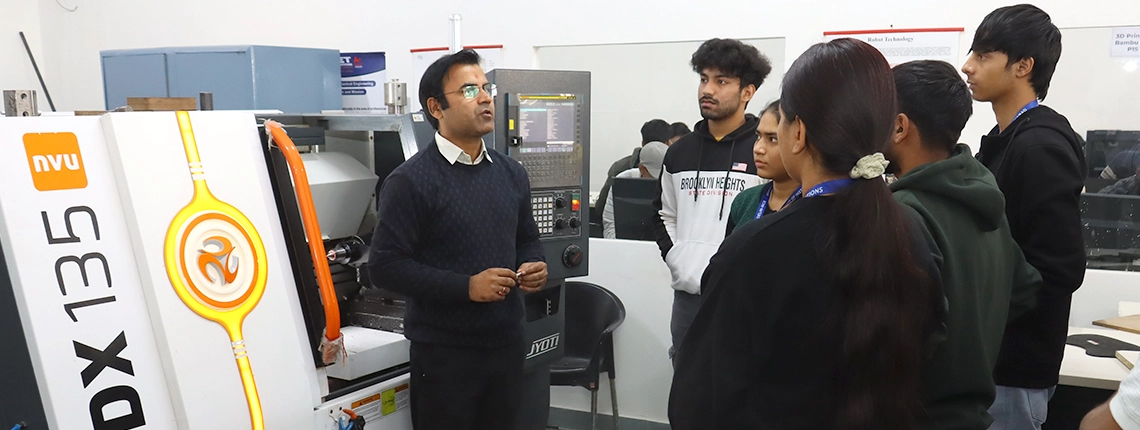
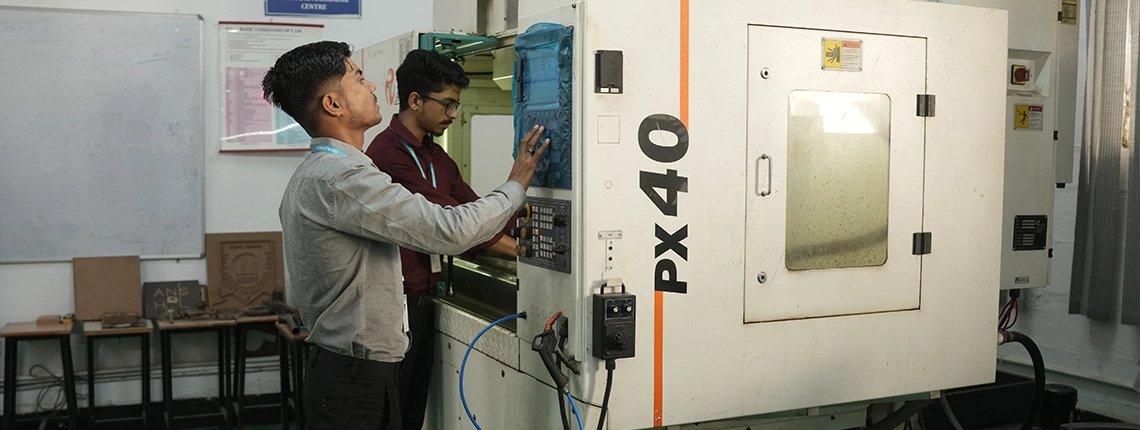
The department boasts state-of-the-art laboratories and research facilities. Continuous industry engagement through collaborative projects, industrial visits, expert talks, and discussions on emerging technologies helps create an environment that mirrors real-world engineering applications. To nurture hands-on learning and interdisciplinary interactions, the department conducts regular technical activities and supports student-led hobby clubs such as the SAE-KIET Collegiate Club.
We have also established strategic collaborations with Mercedes-Benz India Ltd., BIESSEE INDIA, Automotive Skill Development Council (ASDC), and 3D Curiosity to enhance skill development initiatives. Our faculty members are academically accomplished, actively involved in research, serve on editorial boards of reputed journals, review scholarly articles, and contribute to national and international conferences, workshops, and seminars.
This website provides a comprehensive overview of our academic programs, research contributions, laboratories, faculty profiles, alumni engagement, and student activities. We invite you to explore and learn more about the vibrant academic environment of the Department of Advanced Mechatronics & Industrial Automation at KIET.
- Dr. Ashish Karnwal
The Advanced Mechatronics & Industrial Automation Department features modern, well-equipped classrooms designed to create an engaging and conducive learning environment. Each classroom includes a high-definition Smart TV panel that supports interactive teaching, enabling dynamic visual content and real-time demonstrations, along with a dedicated audio system and internet connectivity. Advanced air-conditioning ensures a comfortable atmosphere, helping students remain focused throughout lectures. Every student workstation is fitted with individual power outlets to support laptops and other electronic devices for simulations, hands-on activities, and project work. Collectively, these facilities provide a contemporary, technology-enhanced space that fosters innovation and elevates the overall academic experience.
The department houses 3 modern computing labs that support practical training in programming, software development, and research.
Important Links